

In this piece · 10 sections
- What the GoDaddy domain appraisal tool actually is
- Where GoDaddy domain appraisals get their data
- What the automated tool scores inside a domain name
- Who the GoDaddy appraisal is built for
- Where the domain valuation holds up
- Where the appraisal tool misses what a buyer sees
- Why two tools estimate domain worth differently
- How to use GoDaddy domain appraisal properly
- Frequently asked questions
- The honest summary on domain prices
What the GoDaddy domain appraisal tool actually is
GoDaddy is a domain registrar first and a valuation company second. Its appraisal tool exists because it has a long record of aftermarket activity. GoDaddy says its model combines machine learning with real-market sales data gathered across more than two decades.
That is a real advantage. Most free domain appraisals infer market value from public signals. GoValue can compare a name against a large sales record, which is closer to genuine comparable evidence than an unsupported guess.
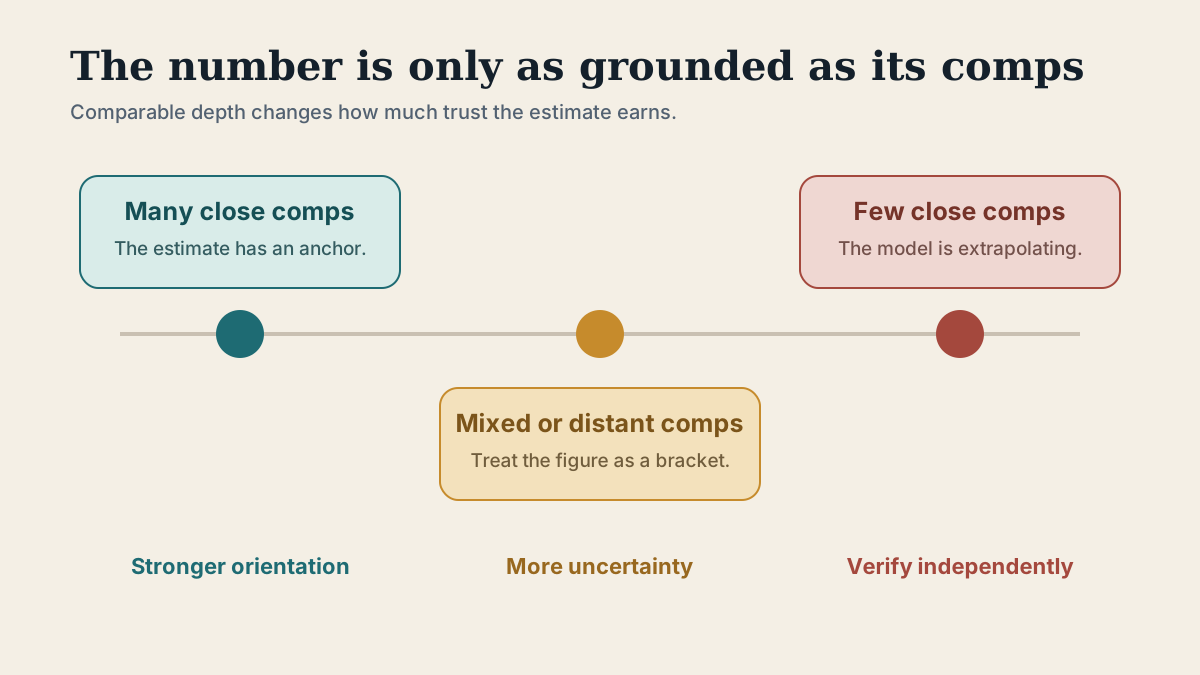
The tradeoff is that the model inherits the shape of that data. Where many similar names have sold, the estimate has an anchor. Where close sales are sparse, the algorithm extrapolates, and extrapolation is where an automated domain appraisal becomes less dependable.
Before relying on any one vendor's figure, run a second domain estimate and compare the range, confidence, and explanation. The spread between methods is evidence about uncertainty, not noise to hide.

Where GoDaddy domain appraisals get their data
GoDaddy is the largest domain registrar in the world, and that scale is the actual mechanism behind the tool. Being the largest domain registrar means an unusually wide view of domain name sales — registrations, renewals, domain auctions, and aftermarket transactions.
Its aftermarket runs through Afternic, GoDaddy's own marketplace. When a name is listed for sale there and closes, that becomes sales data the company can see directly. Comparable sales observed first-hand are stronger evidence than recent sales scraped second-hand.
Independent references exist too. NameBio catalogues publicly reported domain name sales, and checking a name against previously sold comparables is the cheapest way to sanity-check any appraised value you are handed.
The practical consequence: a domain purchase in a well-traded corner of the market gets a grounded estimated value. One in a thin corner gets an extrapolation wearing the same confident formatting.
What the automated tool scores inside a domain name
Automated appraisals read the string itself. The top-level domain matters first — .com domains still command premium prices relative to most alternatives, and a domain extension outside the familiar set usually reads lower for the same second-level domain.
Then come the words. Keyword relevance and keyword popularity both feed keyword value: a name built from terms people actually search reads as more commercially useful than an arbitrary string, which is where domain valuation overlaps with SEO thinking.
Length and memorability follow. A short, pronounceable name has branding potential that a sprawling one does not, and anything running past roughly 15 characters gets harder to type, say, and remember.
Brandability is the hardest input to automate. A coined brandable has no keyword to price and few close comparables. Human buyers pay for how brandables sound and whether they can be trademarked — judgment a model reading character patterns approximates rather than measures.
Who the GoDaddy appraisal is built for
The audience is domain investors. Domainers pricing inventory need a fast read on whether a name is potentially valuable before they bid, and the domain industry has used free tools for that triage for years.
For that job it works. Bulk appraisal lets domain sellers get many domains appraised at once, which is the difference between triaging a portfolio and pricing one name. A rough probability of sale beats no signal at all when you are deciding what to renew.
It is weaker as a pricing authority. If you are setting an asking price on a domain for sale, an automated figure is a starting bracket, not a decision. Check whether the name is still available for registration, what similar domain names selling recently closed at, and where a real buyer's interest would come from.
Where the domain valuation holds up
Common English-language names with familiar extensions are the tool's home ground. GoDaddy itself says that is where it expects its best accuracy. Close comparable sales give the model something concrete to work from.
It is also reasonable on obvious name-quality signals. A clean two-word .com should read differently from a longer hyphenated version. Those are established market patterns, even though they never guarantee what a particular buyer will pay.
For a quick sanity check before you counter an offer, that is useful. It can tell you roughly which bracket a bare name may occupy. Our guides to what makes a domain valuable and reading a domain appraisal show how to inspect the evidence behind that bracket.
Where the appraisal tool misses what a buyer sees
Thin comparables. Newer or unusual top-level domains have shallower sales histories. The further a name sits from the model's transaction record, the more the result is inference rather than evidence.
Brandables with no lookalikes. A coined name has no obvious keyword price and may have few close comps. Human buyers can value sound, memorability, and fit with a particular brand. A model reading string patterns cannot see that buyer-specific premium directly.
Anything with a business attached. This is the big one. If a domain carries a live site earning revenue, most of the value may be the business rather than the string. GoDaddy explicitly says its appraisal does not take the developed website into account.
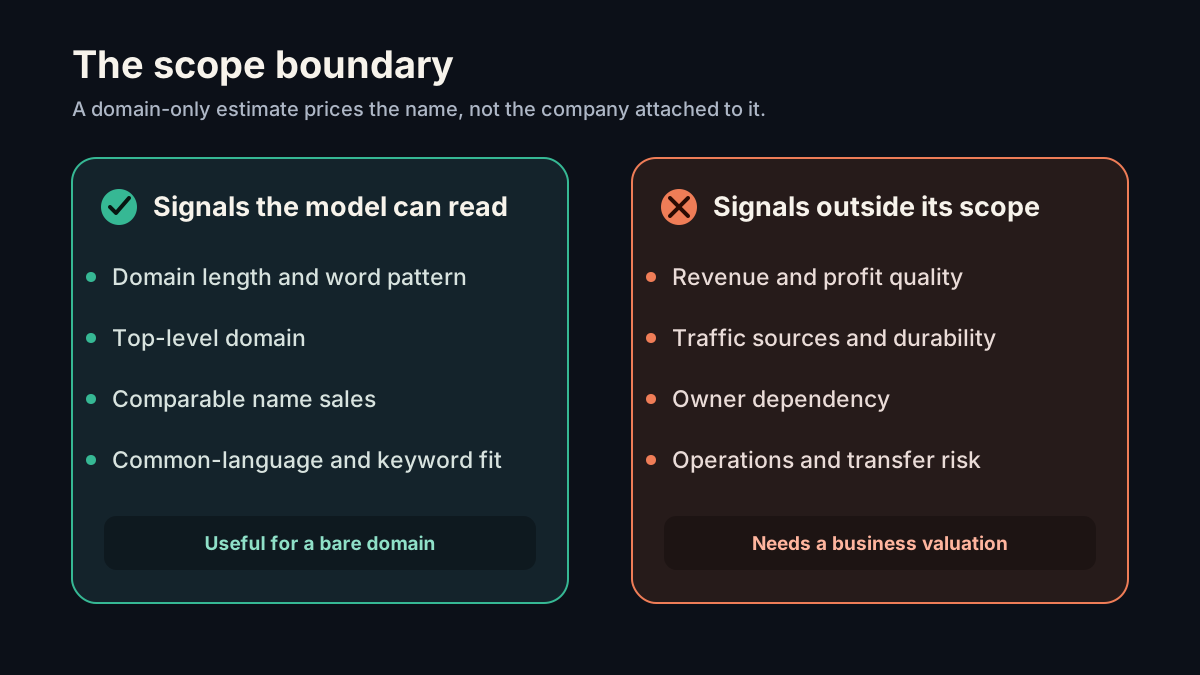
That gap is not a flaw in a domain-only tool. It is a category difference. You are asking a domain appraisal model a question about a company, so the missing inputs must be valued separately.
Why two tools estimate domain worth differently
Run the same domain through several appraisal tools and the spread can be wide. That is expected. Each model is trained on a different slice of the market and weights signals differently. Our EstiBot accuracy review and HumbleWorth accuracy review examine the same limit from two other angles.
The disagreement is information. A tight cluster of estimates suggests the name sits in well-charted territory. A wide spread suggests the comparables or assumptions are thin, so you should trust each point less rather than average them and move on. We explain the mechanics in why valuation tools disagree.
How to use GoDaddy domain appraisal properly
Treat the GoDaddy appraisal as one input, then triangulate. Pull a second estimate, look at recent sales of genuinely similar names, and account for anything the tool cannot see. NameBio's documentation confirms that its own research tooling is organized around historical sales and relevant retail comps.
If your asset is a bare name, an automated estimate plus verified comps may be enough to begin a negotiation. If it has traffic and revenue, stop using domain-only appraisal tools as your primary reference. You are valuing a business, and it needs an earnings and risk analysis.
Use our domain-appraisal reader's guide to inspect a range and confidence score, then run a second estimate. RealSiteWorth returns a range with a confidence read and a written explanation instead of presenting one unsupported figure as certainty.
Frequently asked questions
Are GoDaddy domain appraisals free? Yes. The GoDaddy domain appraisal tool is free to use, and GoDaddy says you can estimate a domain even when you do not own it.
How do I use GoDaddy to value a domain? Open GoDaddy's domain appraisal tool, enter the name, and read the figure as a bracket. To estimate domain worth properly, run the same name through a second method and compare. One number is a starting point, not an answer.
What does the domain value figure actually represent? It is a modelled estimate of resale price, not a quote and not an offer. Treat any single domain value as one reading, then value domain candidates against real closes before you commit money.
Does the TLD change the result? Yes. The TLD is one of the strongest single inputs, and legacy TLDs generally carry higher domain prices than newer alternatives. A good domain on an unfamiliar extension will usually read lower than the same string on .com.
Can I check a name before I purchase a domain? Yes, and you should. Whether you are about to buy at auction or register a free domain name that is still unclaimed, knowing roughly what the domain is worth beforehand is the entire point of the tool.
Is it useful for domain investing? As triage, yes. GoDaddy's domain data is broad, so its read on domain sales patterns is a reasonable first filter. As the basis for what you actually pay, no — verify against real comps first.
Are GoDaddy's estimated prices accurate? They can be directionally useful for common names with close sales behind them. Confidence should fall as the name moves away from that evidence, and the tool is not built to price an operating website.
Can you trust a free automated tool to price a digital asset? Trust it as a starting bracket, not as the number that sets your asking price. A point estimate hides uncertainty; your job is to recover that uncertainty with another method and real comps.
Are paid domain appraisals worth it? For tax, litigation, or lending, an automated estimate is not the right instrument; those contexts may require a qualified human appraiser and a defensible opinion. See our free vs paid domain appraisal guide for the boundary.
Can I get a free valuation for my domain name? Yes. Several tools provide one. Run more than one, compare the spread, and verify the closest historical sales before you act.
The honest summary on domain prices
GoValue is a competent domain appraisal tool doing what its documented data and scope allow. It is strongest where GoDaddy has many similar market records and weakest at the edges: unusual extensions, coined brandables, and any domain carrying a real business.

Keep moving through the Marketplaces, brokers & appraisal tools silo
Where to sell, what it costs, and how the automated appraisal tools compare on accuracy.
- DealsAcquire.com vs Flippa: where to sell a SaaS business in 2026 (Flippa vs Acquire)

- DealsFE International vs Empire Flippers: which broker fits your sale

- DealsInvestors Club review: how the curated marketplace works for buyers & sellers

- DealsMicroAcquire became Acquire.com: what changed, and what it means for startup sellers

- DealsQuiet Light vs Website Closers: which broker fits your exit

- DealsSedo vs Afternic vs Dan: where to sell a domain
