

In this piece · 13 sections
- How we compared these website valuation tools
- Website value calculator comparison at a glance
- What a website worth calculator actually calculates
- Real Site Worth vs GoDaddy GoValue
- Real Site Worth vs EstiBot
- Real Site Worth vs HumbleWorth
- Real Site Worth vs Worth Of Web
- Real Site Worth vs SitePrice.org
- Real Site Worth vs SiteWorthTraffic
- Real Site Worth vs Flippa website valuation
- Which website valuation tool should you use
- How to cross-check any website worth estimate
- Website valuation tool FAQ
How we compared these website valuation tools
A website valuation tool can answer one of three different questions: what a domain name may be worth, what a public website appears to earn, or what an operating business may sell for. Those questions overlap, but they are not interchangeable. This comparison scores fit by job rather than declaring one winner for every owner.
We reviewed each provider's current public explanation of its inputs and output. We looked for five things: whether the tool uses owner-supplied or inferred data, whether it returns a point or range, whether it explains confidence, whether its market data matches the asset being valued, and whether the result is designed for orientation or an actual sale process.
This is an editorial product comparison, not a controlled accuracy study. We did not invent a test portfolio or republish private results. A genuine accuracy benchmark would require verified inputs and later sale prices across many comparable assets.
The website valuation accuracy guide explains why a neat percentage without that evidence would be misleading.
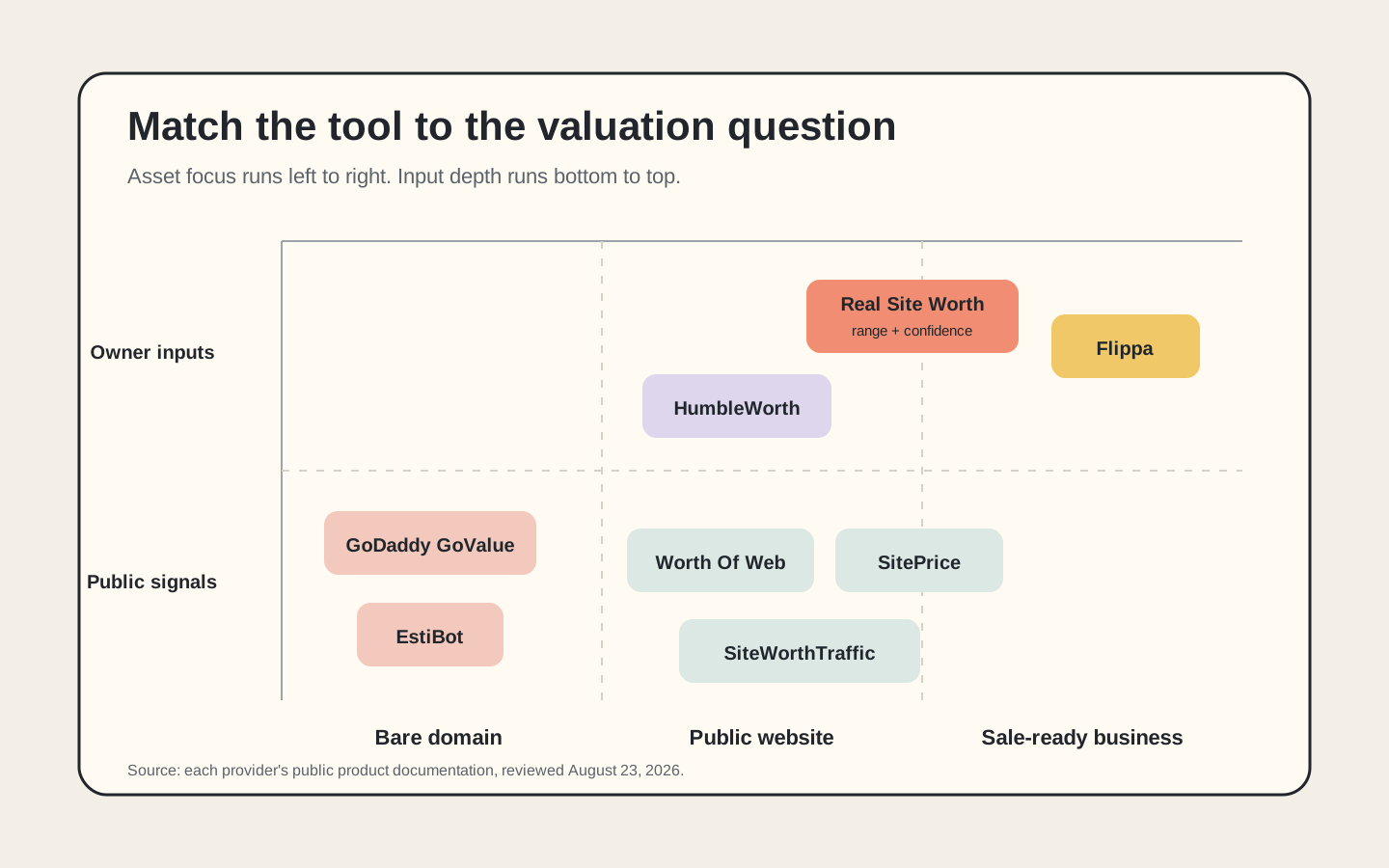
Website value calculator comparison at a glance
What a website worth calculator actually calculates
A free website value calculator usually combines several proxies into one estimation. The calculation may analyze website traffic, domain age, search visibility, pageviews, monetization, and a revenue model. An owner-input tool can add verified monthly profit, expenses, growth, and workload. Those are different evidence classes, even when both tools instantly print a website price.
Traffic-first free tools estimate each visitor from public statistics, ranks, and an assumed advertising yield. They may model the revenue of a website from pageviews and an advertiser rate, then annualize it into a yearly figure. That approach can compare similar sites, but it cannot determine whether the real audience converts or whether first-party analytics tell a different story.
SEO-first value tools may surface backlinks, domain authority, page authority, keyword visibility, or search rankings. Those metrics can provide insight into discoverability and search engine risk, but they do not equal cash flow. Alexa Rank is also a legacy signal: Amazon retired Alexa.com in 2022, so any current checker still centering that metric deserves extra scrutiny.
Business-focused tools evaluate profit quality and transfer risk. A content site, SaaS product, or e-commerce store can have identical traffic and very different margins, customer concentration, and owner workload. Verified earnings make the worth of a website more actionable than a public estimate because they replace assumptions with evidence.
Privacy matters too. Before entering non-public revenue, customer, or analytics data, check what the website uses it for, whether an account is required, and whether the same decision can be made from a less sensitive input. A comprehensive report is useful only if its data usage fits the stakes and its approximate website value is labeled honestly.
Real Site Worth vs GoDaddy GoValue
GoDaddy GoValue is a domain appraisal tool. GoDaddy says it combines machine learning with real-market domain sales data collected over more than two decades. That makes it useful when the asset is the name itself and close comparable sales exist.
Real Site Worth separates a domain estimate from a website estimate. For a domain, it returns an automated range and a confidence posture. For an operating website, it considers business and audience signals that sit outside GoValue's documented domain-only scope. Use GoValue for a quick domain comparable, then cross-check the domain range when the decision matters.
Known downside: GoValue does not appraise the operating business attached to a URL. Revenue, profit, traffic quality, customer concentration, and owner dependence require a website or business valuation. Its estimate can also be less informative when a coined name or unusual extension has few close sales.
Best fit: a buyer, seller, or domain investor who wants a fast first read on a bare name. Read our full GoDaddy appraisal accuracy review for the method boundary and a practical sanity-check process.
Real Site Worth vs EstiBot
EstiBot is a domain-first appraisal and portfolio tool. Its practical strength is consistency at scale: a domain investor can screen a list with the same automated lens, then spend human research time on the names that warrant it.
Real Site Worth is better aligned with someone who wants a range, an explanation of the drivers, and a separate path for an operating website. EstiBot is better aligned with bulk domain triage. Both are automated, so neither can see the private premium one motivated buyer may attach to a particular name.
Known downside: one domain model can be least dependable where human judgment matters most—unusual brandables, buyer-specific relevance, and thin comparable-sales data. A precise point estimate does not make those uncertainties disappear.
Best fit: domain portfolio screening and a consistent first pass. Our full EstiBot accuracy review explains when to verify real comparable sales and when to seek a broker's opinion.
Real Site Worth vs HumbleWorth
HumbleWorth distinguishes the name from the operating website and labels figures as observed, inferred, reported, or modeled. Its website report covers audience, earnings, sale multiple, the domain floor, reputation, transfer considerations, sources, and confidence. That evidence labeling is a meaningful strength.
Real Site Worth also treats a range and its confidence as part of the answer, not fine print after a single number. The practical choice is less about which brand sounds more certain and more about whose report structure helps you challenge the assumptions for your specific asset.
Known downside: HumbleWorth says that without operating figures, revenue and owner earnings are modeled from public evidence and the range is intentionally wide. That is an honest boundary, but it means an owner with verified financials still needs to substitute real numbers before making a sale decision.
Best fit: a no-login public estimate where source visibility matters. Pressure-test inferred revenue and traffic figures against verified analytics before relying on the range.
Real Site Worth vs Worth Of Web
Worth Of Web is a fast website worth calculator for public comparison. Its calculator estimates website value alongside traffic, pageviews, and revenue, and its documentation frames the output as a way to compare sites and track progress.
That makes Worth Of Web useful when you want an instant directional snapshot with no private data. Real Site Worth is the better fit when you want the value presented as a range, want to inspect the confidence posture, or need to distinguish a bare domain from the business operating on it.
Known downside: Worth Of Web describes assumptions based on advertising and affiliate monetization. Those proxies can drift for a subscription business, lead-generation site, ecommerce store, or any website whose traffic does not monetize like a typical content property. Public traffic estimates are also not a substitute for first-party analytics.
Best fit: quickly comparing the modeled scale of public websites. Treat the estimate as a baseline, then replace traffic and revenue proxies with owner-supplied evidence.
Real Site Worth vs SitePrice.org
SitePrice.org combines a website worth calculator with traffic, SEO, domain, and competitor-analysis signals. It is broad by design: one public report can provide a quick overview of several signals an owner or researcher may otherwise check separately.
Real Site Worth focuses more narrowly on valuation posture: an estimate range, a confidence read, and an explanation of which evidence should change the number. SitePrice is useful for a wide public-signal scan; Real Site Worth is useful for turning those kinds of signals into a valuation decision you can pressure-test.
Known downside: breadth does not make inferred metrics verified. A modeled website price assembled from public traffic, SEO, and domain signals may be directionally useful, but it is not evidence that a buyer will pay that amount or that the site earns the displayed revenue.
Best fit: a broad, quick website and SEO snapshot. Verify important metrics at their first-party source before using the result in a listing, negotiation, tax matter, or lending decision.
Real Site Worth vs SiteWorthTraffic
SiteWorthTraffic provides a free, no-registration estimate of website value, daily visitors, pageviews, and revenue. Its own explanation says it uses public information such as popularity, ranks, backlinks, and related signals to build the estimate.
SiteWorthTraffic is convenient when the question is simply, 'What does the public web suggest about this site's scale?' Real Site Worth is the stronger fit when the question is, 'What range should I use, how confident should I be, and which missing inputs could move it?'
Known downside: SiteWorthTraffic explicitly describes its figures as approximate and says it cannot guarantee complete accuracy. The tool cannot see private analytics, customer quality, contracts, expenses, or owner workload from a public URL.
Best fit: a fast public traffic and value check with no account. Use the result to form a question, not to certify revenue or set an asking price.
Real Site Worth vs Flippa website valuation
Flippa's Website Valuation Calculator is the most transaction-oriented tool in this comparison. Its current content-site calculator starts with monthly profit and adjusts the multiple for traffic trend and diversity, niche, revenue sources, content, audience assets, age, backlinks, and owner involvement.
Flippa ties that method to completed sales on its marketplace.
That makes Flippa a strong option for an owner considering a marketplace sale and willing to provide business inputs. Real Site Worth is useful earlier in the process: an independent cross-check, a public-data starting point, or a range before the owner decides whether to enter a marketplace funnel.
Known downside: the result is only as sound as the inputs, and the calculator's documented framing reflects content-site transactions and buyer behavior on Flippa. A SaaS company, ecommerce operation, or private strategic sale may require a different multiple and a deeper financial review.
Best fit: a profitable content-site owner exploring a Flippa listing. Flippa's own help center calls the automated result a guide, which is the right way to use it.
Which website valuation tool should you use
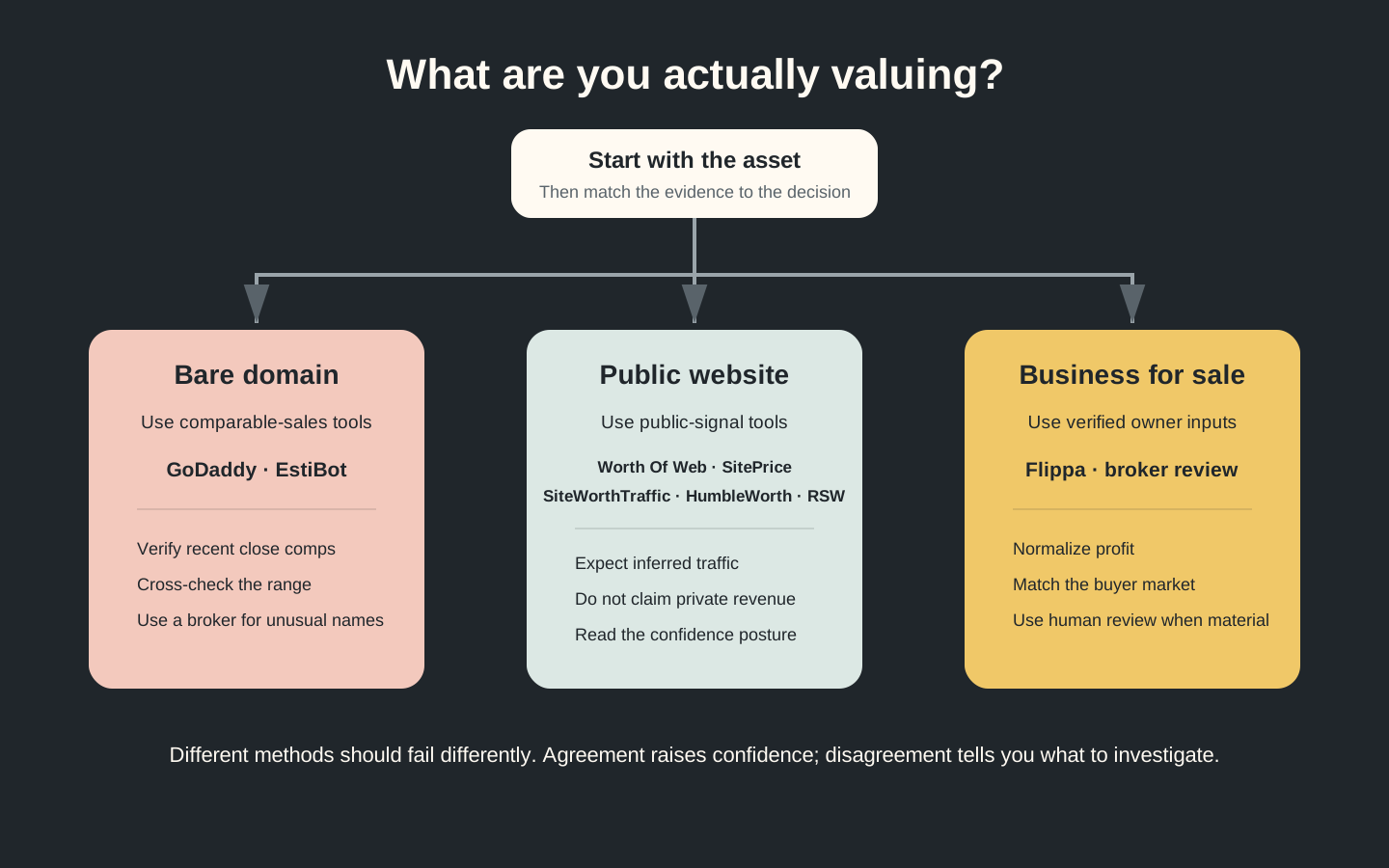
For a bare domain, start with GoDaddy or EstiBot and verify the closest recent sales. A Real Site Worth domain range can provide a second automated view. If the name is material, unusual, or tied to a motivated buyer, a human domain broker is the more appropriate next step.
For a public website you do not own, Worth Of Web, SitePrice, SiteWorthTraffic, HumbleWorth, or Real Site Worth can provide directional evidence. Expect uncertainty because no public checker can see verified expenses, customer quality, contracts, or the owner's workload.
For a business you may sell, use owner-supplied profit and operating data. Flippa is useful when its marketplace and asset model match the intended sale. A broker or qualified appraiser becomes more appropriate when the value is material, the structure is complex, or the number will be used for tax, lending, litigation, or a binding transaction.

How to cross-check any website worth estimate
First, confirm the tool valued the right asset. A domain value is not a website value, and a website value is not automatically the value of the legal business that owns it. Inventory what transfers: domain, code, content, customer relationships, contracts, brand assets, data, and operating processes.
Second, label every key input as observed, owner-reported, or inferred. Check first-party analytics for traffic, bank or processor records for revenue, and a normalized profit-and-loss statement for owner earnings. An estimate should move when stronger evidence replaces a proxy.
Third, run a method that fails differently. Comparing two public traffic estimators may repeat the same blind spot. Pair a public-signal checker with an owner-input multiple, a comparable-sales search, or a broker review. If the results spread widely, widen your range and investigate the input causing the disagreement.
Website valuation tool FAQ
How accurate are website worth calculators? They are best treated as directional estimates. Accuracy improves when the calculator uses verified profit, traffic, operating risk, and relevant comparable sales. It falls when public proxies or sparse comps carry most of the result.
Can I check the value of a website I do not own? Public-data tools can estimate one, but they cannot verify private financials or analytics. Use the result for research, not as a claim about the owner's actual revenue or sale price.
Why do website valuation tools disagree? They may value different assets, infer traffic from different datasets, assume different monetization, or use different sale multiples. The spread is often a useful measure of uncertainty.
Is the highest estimate the best one? No. The most useful estimate is the one whose asset definition, inputs, assumptions, and market evidence best match your decision. Choosing the highest result rewards optimism rather than accuracy.
When should I use a broker or appraiser? Use a qualified human when verified financials, a live sale process, tax, lending, litigation, or another high-stakes decision requires defensible judgment beyond an automated estimate.
How often should I track a website's value? Recalculate after a material change in trailing revenue, profit, traffic mix, search visibility, or owner workload—not simply every month. A yearly baseline plus event-driven updates is usually more useful than watching normal short-term noise.
- GoDaddy — Free Domain Value and Appraisal Toolgodaddy.com
- EstiBot — Domain Appraisal and Investment Toolsestibot.com
- HumbleWorth — Website Valuationhumbleworth.com
- Worth Of Web — Website Value Calculatorworthofweb.com
- SitePrice.org — Website Worth Calculatorsiteprice.org
- SiteWorthTraffic — About its estimatessiteworthtraffic.com
- Flippa — Website Valuation Calculatorlanding.flippa.com
- Flippa Help Center — How to value an asset or businesssupport.flippa.com

Keep moving through the Marketplaces, brokers & appraisal tools silo
Where to sell, what it costs, and how the automated appraisal tools compare on accuracy.
- DealsAcquire.com vs Flippa: where to sell a SaaS business in 2026 (Flippa vs Acquire)

- DealsFE International vs Empire Flippers: which broker fits your sale

- DealsInvestors Club review: how the curated marketplace works for buyers & sellers

- DealsMicroAcquire became Acquire.com: what changed, and what it means for startup sellers

- DealsQuiet Light vs Website Closers: which broker fits your exit

- DealsSedo vs Afternic vs Dan: where to sell a domain
