

In this piece · 11 sections
- The old premium-domain model is not dead, but it is underweighted
- What counts as a premium domain now?
- Why AI answers and agents reduce pure memorability premiums
- Exact-match domains still help, just less than folklore says
- The signal that deserves more weight: clean continuity after a drop catch
- How to diligence a premium domain before you buy
- The worst-case scenario: a great name that cannot rank
- Where Real Site Worth fits in the buying process
- How to price the changed model without pretending to know the future
- Negotiation changes when the diligence is specific
- The 2026 premium-domain checklist
The old premium-domain model is not dead, but it is underweighted
For years, the premium-domain playbook was easy to summarize: buy the shortest memorable .com you can afford, make sure it sounds like a brand, and trust that direct navigation plus authority will do the rest. That model created real winners, and the best names from that era are still valuable.
The problem is that the internet around those names changed. Search results now answer more questions directly. Google is expanding AI-shaped answers inside search, and every major assistant ecosystem is training users to ask an agent before they type a URL. A buyer still wants a name people can remember, but fewer journeys begin with memory alone.
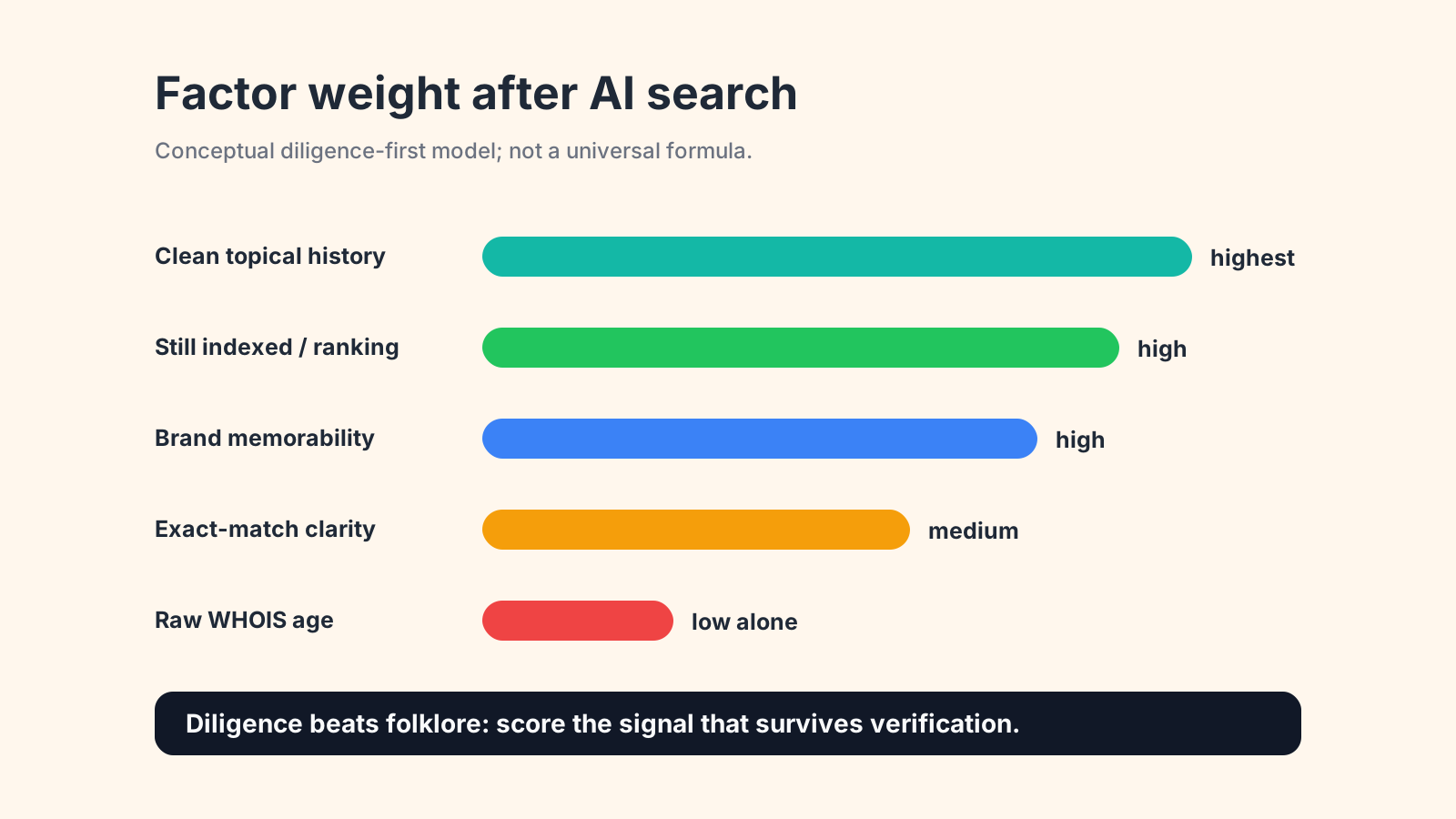
That does not make premium domains obsolete. It means the underwriting model has to change. A name that only wins on brevity and vibes deserves less weight than it did at peak direct-navigation culture. A name that combines brandability with clean, recent, topical history deserves more.
Real Site Worth's lens is deliberately conservative. We are not a domain marketplace, and we do not promise that a name will resell for a headline number. We treat a premium domain as an asset with signals, risks, and confidence bands. The 2026 question is not "is this a cool name?" It is "which evidence survives buyer diligence and search-engine scrutiny?"
Exact-match domains still help, just less than folklore says
Exact-match domains have two kinds of value. The human value is still obvious: a domain like a service, product, or category tells the buyer what the site does before the homepage loads. That helps memory, ads, pitch decks, and offline referrals.
The SEO value is more conditional. Google publicly launched an exact-match-domain update back in 2012 to reduce low-quality EMDs in search results. Since then, an exact-match name has been better understood as a relevance hint, not a ranking cheat code. Thin content on a perfect phrase is still thin content.
For valuation, that means exact match should be scored as a clarity and intent signal. It can raise the floor when the phrase has commercial demand, when the extension is trusted, and when the site you plan to build matches the phrase. It should not be used to override weak content economics or a dirty backlink profile.
This is why a premium phrase domain in a niche with buyers is different from a clever phrase with no market. Search volume is not the same as willingness to pay. A niche with lead value, recurring revenue, or high-ticket services can support a name that a curiosity-driven phrase cannot.
The signal that deserves more weight: clean continuity after a drop catch
The strongest 2026 premium-domain cases often sit between two categories. They are not blank-slate brand names, and they are not operating websites with transferable revenue. They are domains with history that was preserved or quickly reassembled because the name was caught at drop, rebuilt, or redirected before the useful signals disappeared.
A drop-caught domain can be attractive when it was continuously registered or caught fast enough that the market never experienced it as a dead asset. The value is not mystical domain age. The value is retained history: old citations, trusted referring domains, topical associations, crawl familiarity, and sometimes pages that can be rebuilt from archive evidence.
This is especially relevant when the domain was recently active. If Google still indexes pages, if some keywords still rank, and if important backlinks still point to URLs you can rebuild or redirect with topical accuracy, the domain has more than a name. It has a map of work already done.
The best version is boring and powerful: a former site in the same niche you plan to serve, with editorial links, non-spam anchors, recoverable URL paths, and a content plan that satisfies the old intent. You are not buying magic. You are buying a head start that can be verified.
What should move more in 2026
The worst-case scenario: a great name that cannot rank
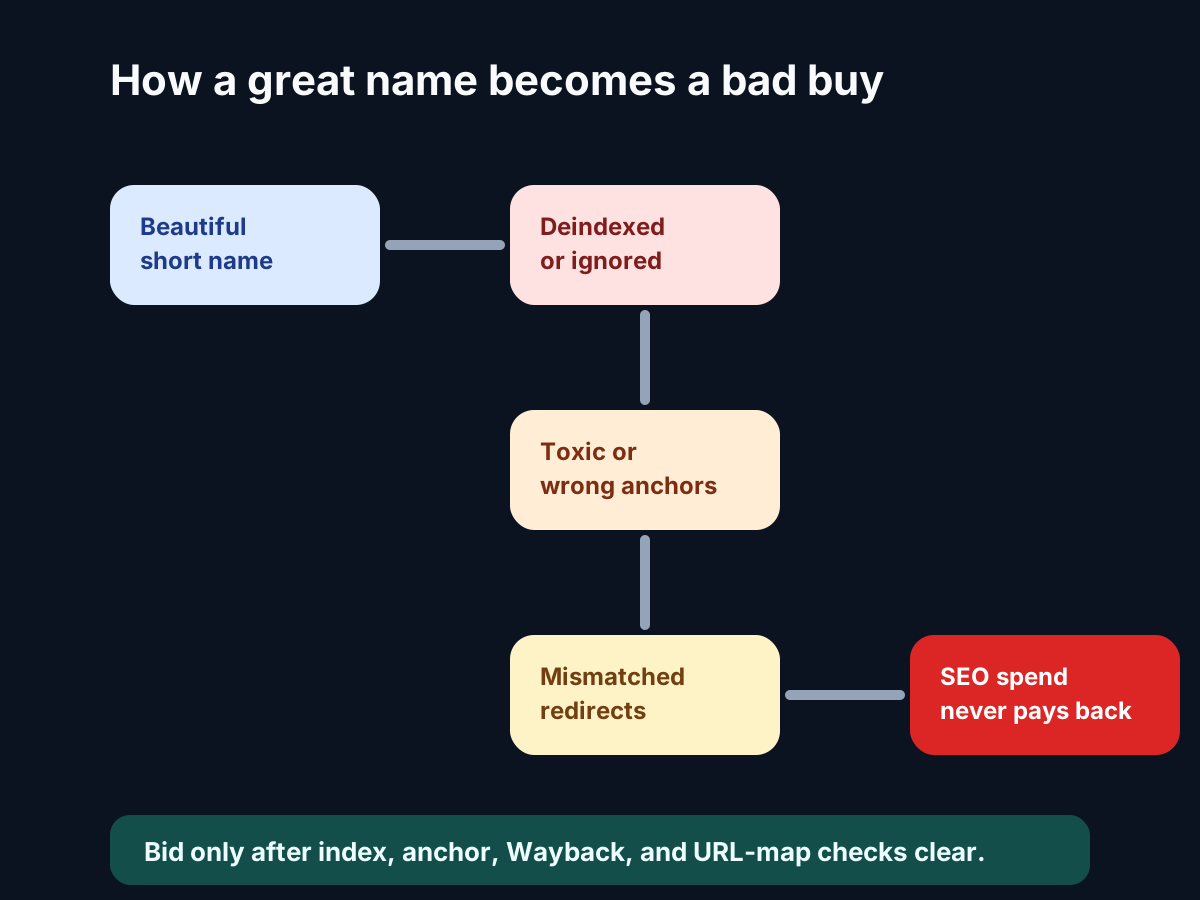
The nightmare version is vivid because it happens quietly. You buy a beautiful premium domain. The name is short, commercial, and easy to pitch. You spend months rebuilding content, paying writers, designing a site, and buying tools. Then the traffic never arrives.
Sometimes the reason is not your content. The domain may have been abused, blacklisted, or trapped in a long-lived trust hole. It may have a manual-action history you cannot see until you control Search Console. It may have been part of a link network. It may carry anchors so toxic that every redirect sends a bad signal to the new project.
The 301 version can be worse. A buyer sees strong referring domains and assumes the equity will transfer. But the anchors point to a topic the new site does not serve, or to old pages that no longer exist. Instead of inheriting trust, the new site inherits confusion. The redirect was technically successful and strategically wrong.
This is why premium-domain diligence should include a negative case. Ask how the investment fails. If the answer is "Google never trusts this name again," the right bid is not a brand-premium bid. It is a distressed-asset bid, or no bid at all.
Where Real Site Worth fits in the buying process
Real Site Worth is not a marketplace and does not broker domain sales. The useful role is education and valuation discipline: turning a pile of signals into a range, confidence note, and risk memo before a buyer lets the asking price anchor the decision.
For a plain brand name, that means scoring memorability, extension quality, trademark risk, and comparable demand. For an aged or drop-caught domain, it means adding SEO research: index checks, keyword residue, backlink quality, anchor risk, and rebuild fit. Those are the kinds of checks the paid calculator tiers are designed to surface or will surface as the domain workflow expands.
The output should not pretend to certainty. A premium domain is worth different amounts to different buyers because the buyer's use case changes the cash-flow path. A domain that is merely neat to a flipper can be strategically valuable to an operator with exact-type content, matching offers, and the ability to rebuild old URLs.
The better question is not "what is the domain worth?" It is "what is this domain worth to the buyer who can use its strongest signal without inheriting its worst risk?" That is the valuation model premium-domain buyers need in 2026.
How to price the changed model without pretending to know the future
The practical pricing move is to split the asset into layers. First price the name as if it were new: length, extension, pronunciation, category fit, trademark risk, and buyer universe. That gives you a brand-only floor. Then add or subtract for history after the evidence is inspected.
The history layer should be conditional. Clean editorial links in the same topic can raise the range. Live rankings can raise confidence. A recoverable URL map can make a rebuild thesis real. But spam anchors, unrelated old topics, or signs of deindexing should lower the range even if the registrar, broker, or auction page advertises a premium price.
This keeps the buyer from making two common mistakes. The first is paying a marketplace premium for a domain that is only cosmetically attractive. The second is paying an SEO premium for a domain whose useful signals cannot be transferred to the intended project.
It also explains why two rational buyers can disagree. A SaaS founder buying the exact category name for a product launch may value recall and trust more than residual backlinks. A publisher buying a recently active content domain may value the URL map and anchors more than the brand. A passive investor may need a discount because they cannot operate the asset.
Negotiation changes when the diligence is specific
Premium-domain negotiations often start with a story: the name is rare, the .com is taken, the seller has held it for years, and a serious buyer should move quickly. A diligence-first model gives you a better counter-story. You can separate what is scarce from what is risky.
If the name is excellent but the history is blank, negotiate as a brand asset. If the backlinks are strong but the anchors are messy, negotiate as a risky rebuild. If the domain is still indexed and ranking for terms you can serve, the seller has a stronger case — but only if the old topic matches your planned site.
Renewal cost also belongs in the model. Some premium domains are expensive only at initial purchase; others carry higher renewal fees. A buyer who ignores annual renewal drag can overstate the long-term return, especially on speculative names that may sit undeveloped for years.
A fair offer memo should name the strongest signal, the weakest signal, and the condition under which you would walk away. That discipline is more useful than arguing whether the domain is "worth it" in the abstract.
- Google Search Central: AI features and your websitedevelopers.google.com
- Google Search Central Blog: EMD updatedevelopers.google.com
- Google Search Central: Site moves with URL changesdevelopers.google.com
- Google Search Central: Manual actions reportdevelopers.google.com
- Google Search Central: Spam policiesdevelopers.google.com
- Cloudflare Learning Center: What is a premium domain?cloudflare.com
- DomainSherpa: The Psychology of Premium Domains (timestamped video)youtube.com
- Ahrefs video search on expired-domain backlink due diligence (timestamped)youtube.com

Keep moving through the Domain valuation silo
What sets a domain name's price — TLD, length, keywords, age, and history — and how automated appraisals should be read.
- MethodBacklink Toxicity and Domain Value: How Toxic Links Actually Move the Number

- MethodBrand value vs domain value: separating the two before you price a sale

- IndustryBrandable domain value: what actually sets the price of a memorable name

- IndustryccTLD vs .com: how country domains affect value

- MethodDoes domain age help SEO (and value)? The honest answer

- DealsDomain appraisal for taxes: what an automated estimate can and cannot do
